
Deck Builders Marketing That Fills the Schedule
Websites, search visibility and paid campaigns built for North Carolina deck and outdoor-living crews — one program, one monthly price, judged on booked consultations.


Everything that books more Decks & Patios jobs
A great website gets you found — but booking jobs takes the whole system. We run search, paid ads, and social for deck builders, all tied to booked work. Start with what you need and add as you grow.

Websites
Conversion-first contractor sites that load fast and turn visitors into booked jobs.
Learn moreLocal Search
Climb the local results and AI search so the right customers find you first — no cost per click.
Learn moreGoogle Ads
Show up the second someone searches your service. Tightly managed campaigns built to book jobs, not burn budget.
Learn more
Local Service Ads
Land the green verified badge at the very top of search — and pay only for real leads, not clicks.
Learn moreFacebook Ads
Create demand before people search — target by area and life event, and retarget every near-miss.
Learn more
Instagram Ads
Put your best before/after work in front of local buyers scrolling their feed.
Learn moreTikTok Ads
Short job videos that reach new and first-time property owners other channels miss.
Learn moreYouTube Ads
Stay top-of-mind with local buyers by what they’re watching and searching.
Learn moreBing Ads
Cheaper clicks and an older, high-intent audience the bigger network never reaches.
Learn moreChatGPT Ads
Get recommended when people ask AI who to hire — before competitors find the channel.
Learn more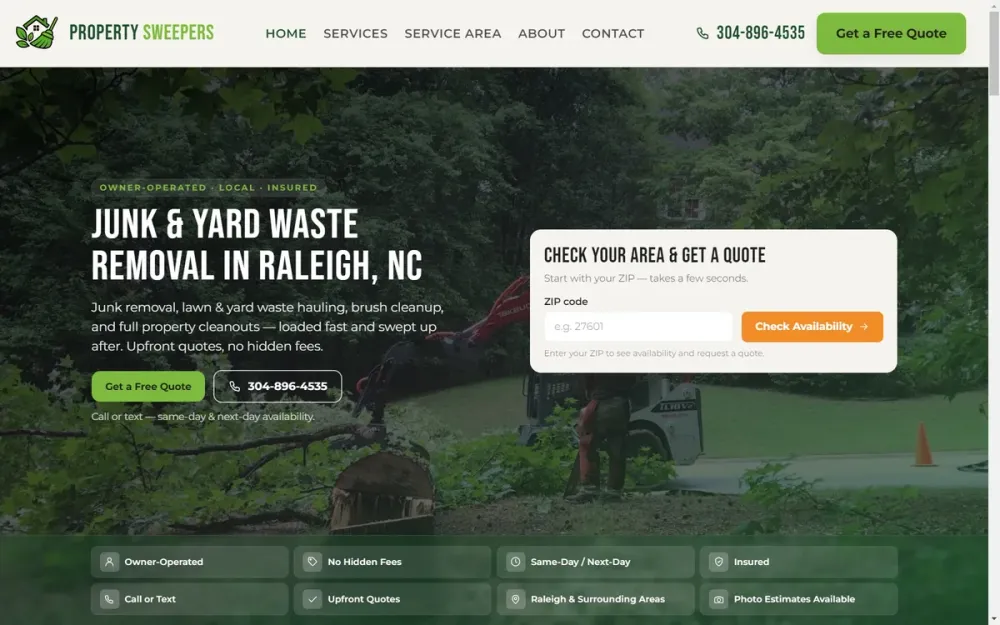
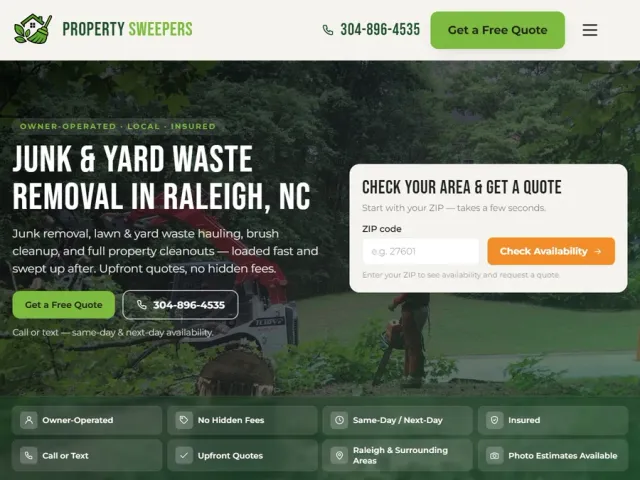
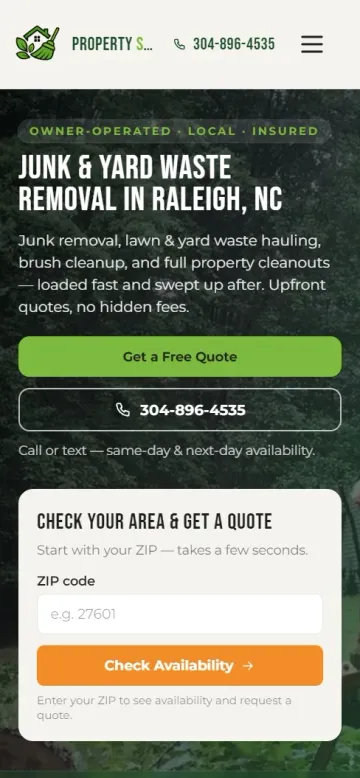
Property Sweepers Case Study
“Figgle Media got back to me right away and turned the whole project around incredibly fast. They built Property Sweepers a beautiful, modern website that loads quick and looks more professional than I ever expected. Easily the best decision I’ve made for my Raleigh business.”

Skyler White
Property Sweepers · Raleigh, NC
Choose the system that fits your growth stage
Every contractor is different. We'll help you pick the right website, SEO, ads, and tracking setup based on your market, services, and lead goals.

Starter System
For contractors who need a clean, professional online foundation.
Best for
- Newer contractors
- Bad or outdated website
- No clear lead tracking
- Need to look pro fast

Custom System
A plan built around your business — start with what moves the needle most, then layer on the rest as you grow.
Best for
- Built around your goals & budget
- Start with one service, add more later
- Call automation, reviews & follow-up
- Scales as you grow

Market Leader System
For contractors who want to aggressively grow and own their market.
Best for
- Established contractors
- Multiple services or locations
- SEO + Google Ads + tracking
- Serious monthly growth plan
Why deck builders choose Figgle Media
A North Carolina agency built only for deck builders — here’s what sets us apart.
- NC-only and contractor-only — we already know how deck builders get hired here
- Built around outdoor-living demand, not generic marketing
- We report in booked consultations — not clicks, impressions, or vanity metrics
- Flat monthly fee — never a percentage of your ad spend
How we launch your growth system
- 1

Discovery call
A real talk about your trade, your market and the towns you cover.
- 2

Free growth plan
A written plan, sized to your market, in 48 hours.
- 3

Set up your system
Site, search, ads and tracking, wired together.
- 4

Launch & learn
Go live, watch the calls land, and tune weekly.
- 5

Scale what works
Double down on the channels booking the most jobs.
What We Build
What goes into your Decks & Patios system
Most deck builders get a site that looks fine and books nothing. Here's what we build instead — tuned to outdoor-living demand and the way the work actually gets won.

Built for intent
Built around "deck builders"
When a homeowner searches "deck builder" near you, your site has about three seconds to earn the call. We lead with the job and the city, keep tap-to-call and a short quote form above the fold, and turn that click into booked consultations.

Built for your service lines
One path per service line
Decks & Patios work splits across wood decks, composite decks, porches, and pergolas — and they don't convert the same way. We build a dedicated page and ad path for each, so deck builders stop losing intent-matched traffic to a single catch-all page.

Built to earn trust
Proof that wins the call
Trex/composite credentials and portfolio depth, real photos of local jobs, and honest feedback are what get a homeowner to pick you. Stock photos never do. Every call and form lands in one dashboard, so you can see which ones turned into paid work — backed by our 90-day performance guarantee.
What Deck Builder Marketing Actually Involves
An outdoor build is a considered purchase. Nobody wakes up needing one the way they need a plumber at midnight — they think about it for a season, look at pictures for a month, and then ask three people for a number. Deck builder marketing that works is built around that timeline instead of fighting it.
Which means the job is not one channel. It is being findable while they are still browsing, being the crew whose work looks best when they compare, and being easy to contact the week they finally decide. That is a marketing system, not an advert.
The cards below break the system into the pieces we actually build and run. None of it is exotic — this trade rewards boring things done consistently, and most competitors quit on them by month three.
What a deck builder marketing system includes
A fast site that loads on a phone in a driveway, a complete Google profile, project galleries organised by material and style, pages for each town you cover, a review engine, and paid campaigns pointed at the searches that mean someone is ready. Run together, judged against booked consultations. Run separately by four vendors, which is how most crews in this trade end up, each piece looks fine in isolation while the whole thing leaks work.

Why deck builder marketing usually fails
Three reasons, in order. The site is slow and the gallery is eight photos from 2019. The Google profile is half-filled with no recent posts and four ratings. And nobody is tracking which calls came from where, so budget keeps flowing to whatever was bought first. Fix those three and most crews double their booked work without spending an extra dollar on advertising.

Being found while they are still looking
The search that matters is rarely “builder near me.” It is “composite vs wood cost,” “how much is a 16x20 build,” “outdoor living permit Wake County.” People researching a big outdoor project ask a hundred questions before they ask for a price. Pages that answer those questions put your name in front of them months before the buying decision, and they cost nothing to keep running once written.

Galleries that do the selling
This is a visual trade and your portfolio is the whole pitch. Photos need to be organised by what people actually shop for — composite, pressure-treated, multi-level, covered, railing style, screened porch — not dumped in one reel. Every project wants a caption with the material, the rough size and the town. That caption is what makes the photo findable, and it is the single most skipped step in the trade.

Your Google Business Profile is the shortlist
When someone gets three names, the first thing they do is search each one. What they find decides who gets called first. Categories set correctly, services listed in full, photos added monthly, questions answered, and posts that show current work. A profile that looks maintained beats a profile that looks abandoned, even when the abandoned one belongs to the better crew.

Reviews are the price of entry
Four reviews from two years ago reads as “this company might be gone.” Forty recent ones reads as “these people are busy, which means they are good.” A review engine is just asking every finished customer, at the right moment, through a channel they will actually use. It is unglamorous and it moves more work than any advertising you can buy.
Answering is half the battle
A design consultation is worth thousands and the person requesting it is contacting two other crews the same afternoon. Whoever replies first usually wins, and the gap is often minutes rather than days. We wire the site so every enquiry hits your phone immediately, and we track how long replies actually take — because most crews think they are fast and the data says otherwise.
Publish a price range
Most crews refuse to say a number before a site visit, and it costs them Saturdays. Publishing honest per-square-foot ranges by material filters out the people whose budget was never real, and it earns trust with the ones whose budget is. You will get fewer enquiries and book more of them, which is the trade every crew says they want and then flinches at.
Paid campaigns for the ready buyers
Search advertising works here, but differently than in an emergency trade. The ticket is big and the decision is slow, so the job is capturing the small share of searches that mean someone is done researching — quotes, contractors, specific materials, specific towns — and staying visible to everyone else through search visibility and remarketing rather than paying for every click.

Seasonality decides the calendar
This trade has the sharpest season of any we work in. Enquiries climb from February, peak through spring, and fall off a cliff once the weather turns. Budget has to move ahead of that curve, not react to it. The winter months are for building the pages and the profile that will rank when demand arrives — spending on advertising in December while the phone is quiet is how crews conclude that none of this works.

Content marketing that shows the work
Not blog filler. A build walked through in eight photos with what it cost and what went wrong. A straight comparison of composite against pressure-treated after five NC summers. A permit explainer for your county. This is the material that ranks, that gets shared, and that makes someone decide you know the job before they have spoken to you.

Marketing tips that actually move work
Photograph every finished build the same day, in good light, before the furniture goes on. Ask for the review while you are still on site. Put the town name in the caption. Reply to enquiries inside an hour during season. Publish a range. None of it costs anything and together it outperforms most of what agencies charge for.

Pages for the towns you cover
A crew working out of Garner competes with different names in Apex than it does in Wake Forest, and one page saying “serving the Triangle” ranks in none of them. Coverage pages, each with work you have actually completed in that town, are how a growing company shows up across a region without pretending to be somewhere it is not.

Social media, used narrowly
Social media is not where deck jobs are sold, but it is where they are remembered. A finished build posted the week it completes reaches the people who already follow you, and a modest budget puts the same photos in front of a local audience by area and interest. Treat social media as reinforcement for the search work rather than a channel expected to book jobs on its own.

Tracking, or none of this is knowable
Every call and form tied back to the campaign, the page and the search that produced it. Without that you are guessing, and guessing in a seasonal trade means you will credit whatever you happened to buy in March. With it you know the true cost of a booked consultation by source, and the budget conversation stops being an argument about opinions.

You own all of it
The website, the analytics, the ad accounts, the profile, the phone numbers, the photos, the content — in your name, on your billing. If you leave, you take the lot including the ranking history that makes a mature account cheaper to run. Any deck contractors who have been through an agency divorce know exactly why this line is here.

A marketing program built around your season
Nothing here produces results in three weeks, and any marketing program that promises otherwise in this trade is describing paid advertising and calling it strategy. The pages you write in January rank in April. The ratings you collect in spring carry you through the following winter. Judged over a season it is the cheapest work you will buy; judged over a fortnight it looks like nothing is happening.

What we will tell you not to do
Do not buy a rebuild in April — you will lose the season to a project nobody has time to review. Do not run broad advertising into a site with no gallery. Do not chase a competitor who is bidding stupidly on your name. And do not pay anyone a percentage of your budget, because that arrangement pays them more when you spend more, which is exactly backwards.

The online presence a builder is judged on
Your online presence is not your website. It is your website plus your profile plus your photos plus what the last twenty people said about you, and a buyer assembles all of it in about four minutes before deciding whether to call. A deck builder with a thin online presence loses work to a deck builder with a thick one, regardless of who builds better. That is uncomfortable and it is also the whole opportunity, because most crews in this trade have never seriously invested in marketing and the bar to clear is low. Deck builder marketing done properly is mostly the discipline of keeping every one of those surfaces current — not a clever campaign.

Marketing that matches how a deck sells
Emergency trades buy attention at the moment of panic. A deck builder cannot. The marketing has to work across a season: visible during research, persuasive during comparison, easy during the decision. Most marketing sold to contractors is designed for the panic model and then underperforms here, which is why so many deck companies believe marketing does not work for them. It works — it just has to be built for a considered purchase, with content that earns the early look and paid campaigns reserved for the buyers who have already made up their minds.

Who you are actually competing with
Not just other deck builders. You are competing with the general contractor who will bolt a deck onto a bigger remodel, the handyman who will do it for cash, and the buyer who decides to wait another year. Each of those needs a different answer, and good marketing gives all three: the portfolio that shows you specialise, the pricing that makes a real deck builder look worth it, and the content that explains why waiting costs more than it saves. A deck builder marketing plan that only compares you to other deck builders is fighting a third of the battle.

What the first ninety days looks like
Month one is foundations — site speed, the profile, the gallery rebuilt around materials, tracking wired in. Month two the content and coverage pages go live and the review engine starts running. Month three is when search visibility begins to move and paid campaigns get pointed at the searches that have proven to convert. A deck builder expecting booked work in week two will be disappointed; a deck builder judging this at the end of a season usually finds it was the cheapest marketing they have bought.

What we need from you
Photographs. That is genuinely most of it. A deck builder who sends us fifteen good shots a month will out-market one who sends none, no matter what we do with the budget. Beyond that: answer the phone during season, tell us which jobs you actually want more of, and let us publish real prices. The marketing runs on evidence of your work, and you are the only source of it.

Why cheap marketing costs the most
The two-hundred-a-month offers are real and they do produce something — a template site nobody updates, a listing claimed once, a report full of impressions. What they cannot produce is the sustained attention this trade needs: photographs captioned every month, content that answers real questions, campaigns tuned as the season turns. Deck builder marketing at that price is a subscription to the appearance of marketing, and a deck bought on that basis never gets photographed properly. The crews who buy it usually spend two years learning that, which is two seasons of demand handed to whoever did the work properly.

Building an online presence that compounds
The best thing about this work is that it accumulates. An advertising budget buys attention for exactly as long as you pay for it, and stops the day you do. A page that ranks, a profile with four hundred photos, six years of ratings — that online presence keeps working whether or not you spend anything this month, and it gets harder for a new competitor to displace every year you maintain it. Most of what we build is intended to still be earning in five years, which is a different proposition from renting clicks.

Choosing bigger builds on purpose
Two crews can run identical marketing and end up with completely different businesses, because one chased volume and the other chased ticket size. If you would rather build four large outdoor living projects a season than twenty small platforms, the marketing has to say so — the photography, the pages that rank, the price ranges you publish and the searches you pay for all need to point at the work you actually want. This is the single most under-used lever available to a deck builder, and it costs nothing to pull.

What happens after the first year
Year one is construction: the site, the profile, the content, the tracking. Year two is compounding — the pages written last spring are ranking, the ratings have accumulated, and the marketing budget can shift from building assets to sharpening them. Costs per booked consultation typically fall through year two for exactly that reason. The crews who see the worst return are the ones who rebuild everything every eighteen months, because they keep resetting the clock on the only thing that was going to pay them back.
Deck work across North Carolina
These are the NC cities we work in most — but we’re not limited to them. If you serve customers anywhere in North Carolina, we can help.
Built in North Carolina, working with contractors statewide.
Headquartered near Raleigh — we serve roofing, HVAC, plumbing, electrical, concrete, landscaping, remodeling, and home-builder contractors across NC.
- Serving contractors across North Carolina
- (919) 679-1115
Questions NC deck crews ask
How long before the marketing produces booked work?
What does it cost?
Do I need a new website?
We are booked out already. Why bother?
Who owns the accounts and the content?
Ready to book more consultations?
Free growth plan — we’ll show you where your next booked consultations should be coming from.